
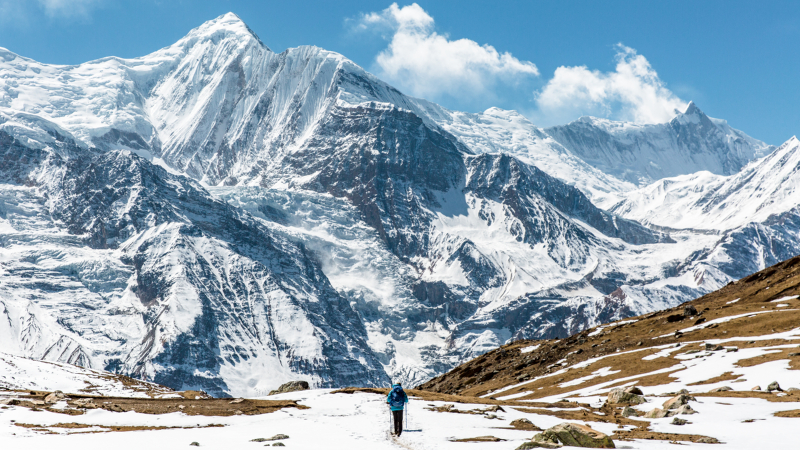
It might seem daunting to start booking your Annapurna Circuit Trek, but it can be easy and even fun with the proper approach. With its panoramic Himalayan views, vibrant villages, and many different ecosystems, the Annapurna Circuit is one of the most famous treks in the world. The key, and the path to stress-free wedding planning, is in planning early and making clear choices.
The first decision is when to go. Annapurna has the best trekking conditions in spring (March-May) and autumn (September-November). In these seasons, the weather is mostly sunny, with moderate temperatures. So after you pick your perfect window, the next stage is to book your flight to Kathmandu or Pokhara (where most Annapurna Circuit treks start from Besisahar and end in Jomsom or Nayapul). It’s a good idea to get to Nepal a couple of days early to acclimate to the time change and make final preparations.
Choose if you wish to book your trek through a local company, an international company, or whether you will organize it yourself. The most economical and culturally engaging way to trek is through a local Nepal-based trekking agency. These agencies generally supply all of your needs, from guides and porters to permits and accommodations. By booking through a trustworthy local agency, you’ll be supporting the Nepali economy and gaining the most current trail information, personalized attention, and experienced guides who speak the local dialects and are sensitive to regional customs.
Or, if you want more control, you can easily arrange the trek yourself — but you’ll still need a few things. You will require two permits: the Annapurna Conservation Area Permit (ACAP) and a Trekkers’ Information Management System (TIMS) card. You can get these in Kathmandu or Pokhara, but be prepared with passport-sized photos and a copy of your passport. You will also need to sort out transportation to and from the trailheads, which may change depending on road conditions and the route you choose.
Lodging on the Annapurna Circuit consists primarily of teahouses, small, family-run inns that offer meals and simple rooms. During peak times, it’s a good idea to reserve some of the key places beforehand, especially in popular villages such as Manang or Muktinath. (Many agencies will do this for you, though if you’re trekking solo, you can call the day before, or ask locals , and they may secure you a spot.)
Finally, prepare your gear. Whether you hire or carry your own, be sure to have suitable trekking shoes, thermals, a sleeping bag, and a good daypack. Pack smart but light, and be sure to get travel insurance that includes emergency evacuation, as parts of the trail reach more than 5,000 meters in elevation.
You don’t have to go through hoops while booking your Annapurna Circuit Trek. With a little bit of planning and the right local help, it can be simple and rewarding. Prepare thoroughly in advance and respect the local culture and the environment, and before long, you’ll be rejoicing in an incredible Himalayan adventure as (relatively) painless and stress-free as the trail is beautiful.
Annapurna Circuit Trek: When Is the Best Time To Book?
The timing of your Annapurna Circuit Trek is critical both in comfort and safety. The best time to trek is the two seasons, spring (March to May) and autumn (late September to November). These are the best windows for weather stability, clear skies, and fair daytime conditions. In spring, the trails are draped in blooming rhododendrons; in autumn, they promise clear vistas of the Annapurna and Dhaulagiri ranges once the monsoon rains have passed.
I highly suggest booking at least 2 or 3 months in advance, or else you might end up without any space left to book a trek, especially if you’re doing a guided group. Flights, hotels, and guides tend to book up for durations of these two months. Trekking is an option in the off-season, although in winter, er snow-blocked passes may be an obstacle, and in the summer monsoon, heavy rain and leeches are a factor.
Reserving early also means you can find better flight prices, and more time to organize permits and even train and prepare. For solo or independent trekkers, I recommend booking in advance to have full logistics coordinated — from the teahouses to transportation. In summary, selecting the right season, reserving well in advance lets you minimize stress, guarantee access to the trails, and ideally increases the probability of a safe and attractive trek.
Organize Through a Local Agency or Go Independent?
Whether to book the Annapurna Circuit Trek Itinerary through a local agency or go independently will depend on your trekking style, experience level, and budget. Through a well-established Nepali agency, it can make your entire visit much easier. They typically offer packages that include permits, guides, porters, transportation, and accommodation— all in one. It relieves you of logistical pressure and lets you concentrate on the trek.
There are also cultural insights to be gained, as well as safety benefits, from working with a community company. Guides from the area are familiar with the terrain, weather, and how to manage altitude-related problems. They’re also good translators and cultural go-betweens, which facilitates a more meaningful connection with the local communities you’ll encounter along the way.
Independent trekking, meanwhile, is more flexible and can generally be cheaper. If you have some experience and feel comfortable with gear, permits, and route planning, going alone is a valid option. There is a catch, however – recent government legislation insists that all trekkers are accompanied by a licensed guide.
The bottom line is that booking with a local agency is the easier way, and you will be immersed in the culture, while independent trekking gives you more control. The choice is yours, but see if you can find out which option best suits your comfort levels, fitness levels, and trekking goals.
What kind of permits do you need, and how do you get them?
To trek the Annapurna Circuit, you need two permits: an Annapurna Conservation Area Permit (ACAP) and a Trekkers’ Information Management System (TIMS) card. These things are a necessary convenience for gaining access to and being tracked and registered within protected lands.
Annapurna Circuit Trekking. For foreigners, the ACAP permit is approximately NPR 3,000 (or about USD 25) while the TIMS card costs NPR 2,000. You can apply for both permits in Kathmandu (at the Nepal Tourism Board office) or Pokhara before you hit the trail. For the application, you will need two passport-sized photographs, a photocopy of your passport, and your trekking route itinerary. If you’re booking through an agency, they’ll sort all this for you, with fees usually wrapped up in the total cost of the trek.
Keep the original permits with you, as the checkpoint staff on the trail will request a view of them. Inability to supply them can lead to fines or loss of continued access.
6 Highlight: Get permits that not only help efforts to protect the environment of the Annapurna but also the local community. They’re not just paperwork to complete; they’re the small but crucial way to give back to the trails and the villages that enable you to enjoy the trek.
What Is the Proper Itinerary for Trekking?
The best Annapurna Circuit itinerary for you will depend on your time available, fitness level, and preferences. The traditional Annapurna Circuit hike lasts from 15 to 18 days, starting from Besisahar and ending in Jomsom or Nayapul. It circumnavigates the entire Annapurna massif and passes through the popular Thorong La Pass (5,416 meters) – the high point of the trek.
For those with less time, variations of the circuit, either starting further along the trail (villages such as Chame) or flying out from Jomsom, exist. On the other hand, trekkers who wish for a longer trek can extend the trip to places like Tilicho Lake and Nar Phu Valley for more adventure and an off-the-beaten-track experience.
Itineraries can also differ by the number of acclimatizing days that are scheduled. And it’s important to take it slow — going up too fast will only increase your chances for altitude sickness. Then see if there is a rest day built in, ideally at Manang or Yakkharka.
Booking through a local operator, however, means getting tailor-made itineraries. Whether you’re looking for a cultural, scenic, or challenging hike, your guide will help customize the route. The right itinerary is both exciting but also safe and sustainable.
How Do You Get to and from the Trail?
The transportation used for the Annapurna Circuit trek may differ depending on the starting and ending point. The classic starting point is Besisahar, from Kathmandu or Pokhara, it is a 67-hour bus ride. From there, many trekkers now hop a jeep to Chame or Syange to avoid the dusty, lower reaches of the trail. A private jeep costs more but is far more comfortable; slower local buses are also available but far less predictable.
Many eninas Jomsom, where you can, depending on the weather, fly back to Pokhara on a short domestic flight. This airborne commute saves time and effort, but it can be delayed or canceled because of wind. Or you can get a jeep or a bus from Jomsom to Tatopani or Beni and connect by road to Pokhara.
If you book via an agency, all transportation will typically be taken care of for you (airport pick-ups, hotel pick-ups, etc.), and your trek logistics will be arranged. Independent trekkers will need to book their tickets and vehicle at least a day or two in advance, especially in high season.
Annapurna Round Trek Early planning of transportation ensures that you’ll have a less chaotic beginning and end to your trek. It also enables you to budget more effectively and allows you to avoid any last-minute delays or stress, ensuring the whole experience is as smooth as the trail in front of you.
What Are The Types of Accommodations on The Annapurna Circuit?
Lodging along the Annapurna Circuit is mostly in teahouses — simple, family-run inns that provide trekkers with plain rooms and home-cooked meals. Most rooms are twin-share, with wooden beds, a foam mattress and blankets, but it’s a good idea to provide your sleeping bag (suitable for cold weather, particularly in the higher reaches). Bathrooms may be shared, and are usually equipped with squat toilets with sporadic hot water.
The higher you hike, the rougher the teahouse conditions, especially after Manang and towards Thorong La Pass. Although some lower-altitude villages increasingly have upgraded lodges that offer Wi-Fi, en suite baths, and hot showers (for a price), luxury is not the norm.
It’s a good idea to book in advance during this time of the year, especially in popular stopovers such as Manang, Yak Khark, and Muktinath. Agencies usually reserve these for their clients; however, independent trekkers may need to turn up in the early afternoon to grab a bed.
The true value in teahouse-stays is the hospitality of the local hosts. Food is cooked fresh and can include ingredients grown on site, while evenings can be spent exchanging stories with other trekkers around the stove. Basic accommodation but abundant in culture, comfort, and camaraderie – each overnight stop of this incredible journey is a cornerstone.
How Expensive is the Annapurna Circuit Trek?
The price of the Annapurna Circuit Trek depends on how you choose to trek, guided or independently, and your desired level of comfort and services. A guided trek can cost you between $800-$1200 USD if you book through a local agency for a 14 to 18-day package Annapurna Trek program on average. This generally covers transportation, permits, guide-porter services, Food, accommodation, and sometimes a night in Kathmandu or Pokhara.
If you’re hiking on your own, your daily budget could be from $25 to USD 40, including accommodation, food, and other costs. There are (ACAP and TIMS) permit fees of roughly $45 to USD 50 combined, and transport costs will depend on where you are starting and finishing.
Domestic flights, gear rental, snacks, Wi-Fi, charging fees, and hot showers are frequently extra costs in teahouses. It’s also customary to tip your guide and porter -around 10% of the cost of your trek is recommended- so factor that into your budget!
Security and the economy Hiring a local guide and porter when trekking semi-independently provides an added security while also bringing business back to the local economy. The Annapurna Circuit can be good value compared to other world-class treks. If you plan far enough ahead. Regardless of budget or comfort, the Annapurna Circuit has an option for every breed of traveler.
What Do You Need For a Comfortable and Safe Hike?
What you pack for your Annapurna Circuit trek can play a major role in determining how comfortable and safe your experience will be. The trail traverses several climatic zones — from hot, lowland forests to cold, high alpine passes — so layering is key. Start with moisture-wicking base layers, layer with insulating layers of, say, fleece or down, and finish with a waterproof outer shell. What is essential is a pair of good, broken-in trekking boots, a warm hat, gloves, and quick-dry clothes.
Tilicho Lake Trek You’ll also need a good sleeping bag, rated for at least -10°C, even though the teahouses provide blankets. A backpack between 40/50 litres is just perfect, and most of the trekkers rent a porter for heavy loads. Other must-haves include a headlamp, reusable water bottles, water purification tablets, sunscreen, a first-aid kit, trekking poles, and toilet paper (usually not supplied).
Electronics such as power banks, solar chargers, and offline GPS apps can be useful, particularly where electricity and Wi-Fi are inconsistent. And don’t leave home without your trekking permits, extra passport photocopies, and passport-size photos.
Travel light, but don’t skimp on the essentials. Himalayan weather is fickle, and preparation is key. Whether you hire an agency or go it alone, with the proper gear, your focus will be on the experience, not the discomfort.
How Do You Keep Safe and Healthy While on the Trek?
Preventing illness and staying healthy on the Annapurna Circuit is all about acclimatization, hydration, and listening to your body. The trek climbs to higher than 5,400 meters at Thorong La Pass, where people are at risk of altitude sickness. Climb slowly, take rest days (in particular in Manang), and don’t skip acclimatization spots.
Your best defense is to drink lots of clean water — three to four liters a day — and avoid alcohol, especially at altitude. Whatever you do, bring water purification tablets or a SteriPen, as bottled water is both expensive and environmentally unsound. Eat only freshly cooked foods and avoid raw veggies or unpasteurized dairy to stay safe from food poisoning.
Bring along a basic first aid kit, including items such as ibuprofen, bandages, altitude medication (such as Diamox), and rehydration salts. A qualified guide can help with altitude concerns and emergency procedures. There is a helicopter evacuation in the event of a serious injury or illness, but this should be covered by your travel insurance.
Before you go, always check trail conditions and weather reports, as well as road closures. Snow slides and landslides obstruct the road on rare occasions, particularly in the area of the pass. Prep ahead of time, remain mindful while trekking, and honor your body’s capabilities is the optimal way to stay safe on the trek, and get the most out of the adventure.
What Are Some Common Mistakes I Should Avoid When Booking?
Annapurna Circuit Nepal First-time trekkers tend to make unnecessary mistakes when booking the Annapurna Circuit Trek, and should refuse to repeat the error in order to help their process safer as well as smoother. One of the worst mistakes is underestimating the amount of time you will have. Haste makes waste in this itinerary, and the a risk of altitude sickness. Always go for a way that permits your body to darken gradually.
Another mistake is doing business with unauthorized agencies. Going for the cheapest without looking into reviews or credentials might result in bad service, novice guides, or, in worse cases, scams. Only book through registered trekking companies, and ask for qualifications and traveler reviews.
Lacking knowledge of permit needs is another issue. You could be fined or refused entry at checkpoints if you don’t have the proper ACAP and TIMS permits. This is taken care of by agencies; however, independent trekkers should arrange it in advance.
Lack of sufficient insurance also ranks high on the number of potential oversights. Ensure that your policy covers high-altitude trekking and evacuation in case of an emergency. Many insurance plans don’t cover adventure sports or trips to extreme altitudes, so read the fine print carefully.
Finally, carrying too much or inappropriate gear can make a big difference in your comfort and ability to move around. Take only what you need, and test your gear before you go. By staying away from these blunders, you can save yourself a lot of trouble, time e and energy, and enjoy your Annapurna adventure to the fullest.
Are You Searching for Annapurna Circuit Trek Guide?
Since April 2023, every foreign trekker must officially have a licensed guide for trekking in Nepal’s national parks and conservation areas, which include the Annapurna Circuit. This was a legislation introduced for the safety of the trekkers and better management, and for the sake of local employment.
Everest Base Camp Trek Booking a guide: why not go alone? As an alternative to hiring a guide, some experienced hikers may want to trek the route themselves, free of any dependence on creditors. Trained Trekking guides will keep you out of harm’s way on unpredictable trails and help with navigation, acclimatization, local knowledge, and translation. Guides can offer understanding of local culture, be there to book the teahouse, and help with logistics if anything goes awry.
Beyond that, it is a legal necessity, and trekkers are the richer for it. You will have access to greater cultural knowledge, won’t get lost, and will be educated in pacing to not get sick from the altitude. If you go with a full-service package through a local agency or an independent guide, once again, you’ll need to have one by your side, and it’s worth it.
How Should I Train for the Annapurna Circuit?
Planning for the Annapurna Circuit Trek requires a mix of fitness, logistics, gear, and mental preparation. The trek climbs to over 5,000 meters, so developing heart and leg strength is crucial. Attempt training 8 to 12 weeks in advance, targeting long hikes, stair climbing, and a loaded backpack.
And perhaps equally significant is the acclimatization strategy. Pick a plan with rest days, particularly in Manang – a peaceful village nestled in the mountains at 3540m – and go slowly. Learn the ABCs of AMS and how to identify when it’s on the loose.
For logistics, get your ACAP permit, TIMS card, and a guide (compulsory under Nepali law). Arrange for your flights, hotel stays in Kathmandu or Pokhara, and transportation to the trailhead. If you opt to go through a trekking agency, then many of these factors will be taken care of for you.
Prepare well and bring the right gear, such as your layering clothing, trekking poles, a good sleeping bag, well, first aid kit, and water purifying items. Be sure to secure travel insurance that includes high-altitude trekking and emergency evacuation.
Prepare yourself mentally for long trekking days, basic lodges, and changing weather conditions. The better prepared you are, the more fun and safer your trip will be.
How Expensive Is a Trek Guide to Annapurna Base Camp?
You can expect to pay between $25-USD 35 USD per day for a guide for the Annapurna Base Camp (ABC) trek, and this will vary on the guide’s experience, whether they speak English, and whether meals and accommodation are included with them. Daily rates set the price by most of the independent guides, resulting in many trekking agencies offering full-service package deals that include fees for permits, transportation, guide/porter’s wages, lodging, and meals — these can range from $600-900+ USD for the entire 7–10-day round-trip.
If you hire a guide through an agency, their fee usually includes the insurance, food, and lodging. If you are hiring a car independently, you may need to pay for these costs separately, for another $10–$15 per day.
Everest Base Camp Since 2023, it has been mandatory to hire a licensed guide, which isn’t just a question of compliance but also functions as a health and safety measure and imparts much-needed cultural context. It’s not just that guides know the trail, help you acclimate to altitude, and connect you with locals in a way that the self-guided treks do not. For a quality tour, select a government-certified guide with favorable reviews, if possible, and an understanding of the area.
Do you need a Guide for the Manaslu Circuit trek?
Yes, hiring a licensed guide is compulsory for the Manaslu Circuit Trek—and it has been for quite a few years now because of its restricted-area status. The Manaslu region is a restricted area, and you must get a permit (Restricted Area Permit – RAP) through a registered Nepali trekking agency. Trekking alone is not permitted; a minimum of two trekkers must be escorted by a government-licensed guide to be allowed entry.
A guide is essential for this isolated, culturally sensitive trek, more for practical reasons than legal ones. The trek also passes through remote villages, high passes including Larke La (5,106m), and less-developed areas with minimal signage. A guide keeps you safe, assists with altitude acclimatization, and handles all logistical support, such as lodging, food, and emergency planning.
Additionally, the Manaslu area has a strong Tibetan-influenced culture, and a guide from this region provides some good insights into the customs, languages, and monasteries you will be passing. Engaging with a reputable local agency also means that your permit is taken care of properly and that you are contributing to sustainable tourism in the region.
Ultimately, if you’ve debated whether or not to hire a guide for the Manaslu Circuit Trek, the answer is not should, but must, to keep themselves safe, legal, and truly immersed in the Himalaya.